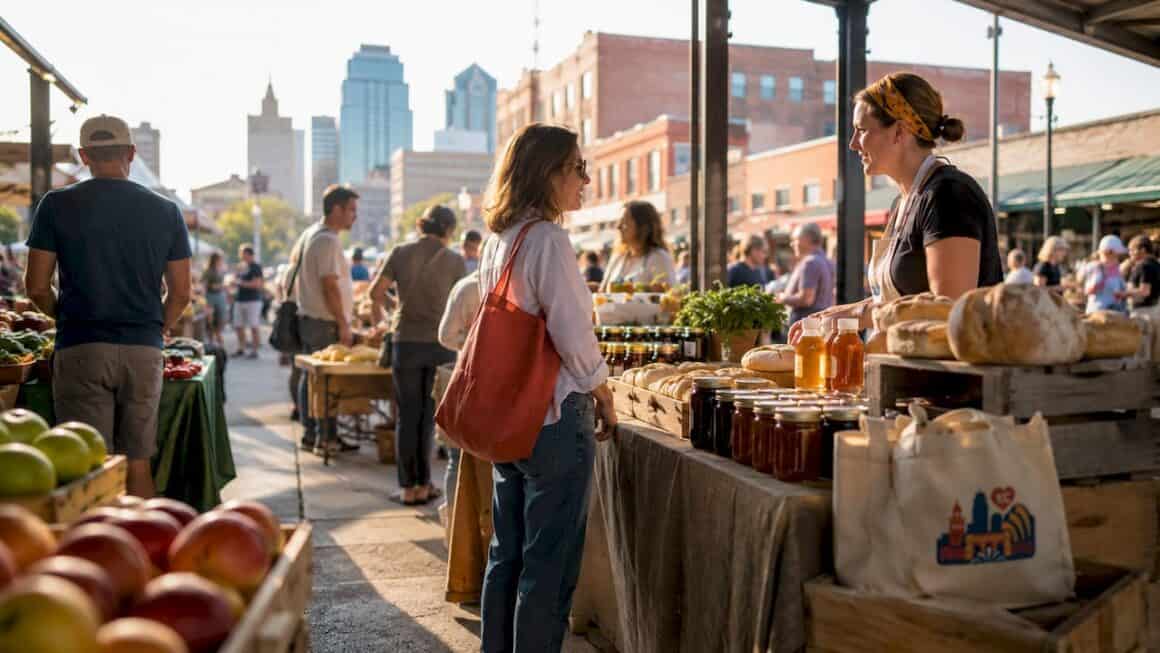









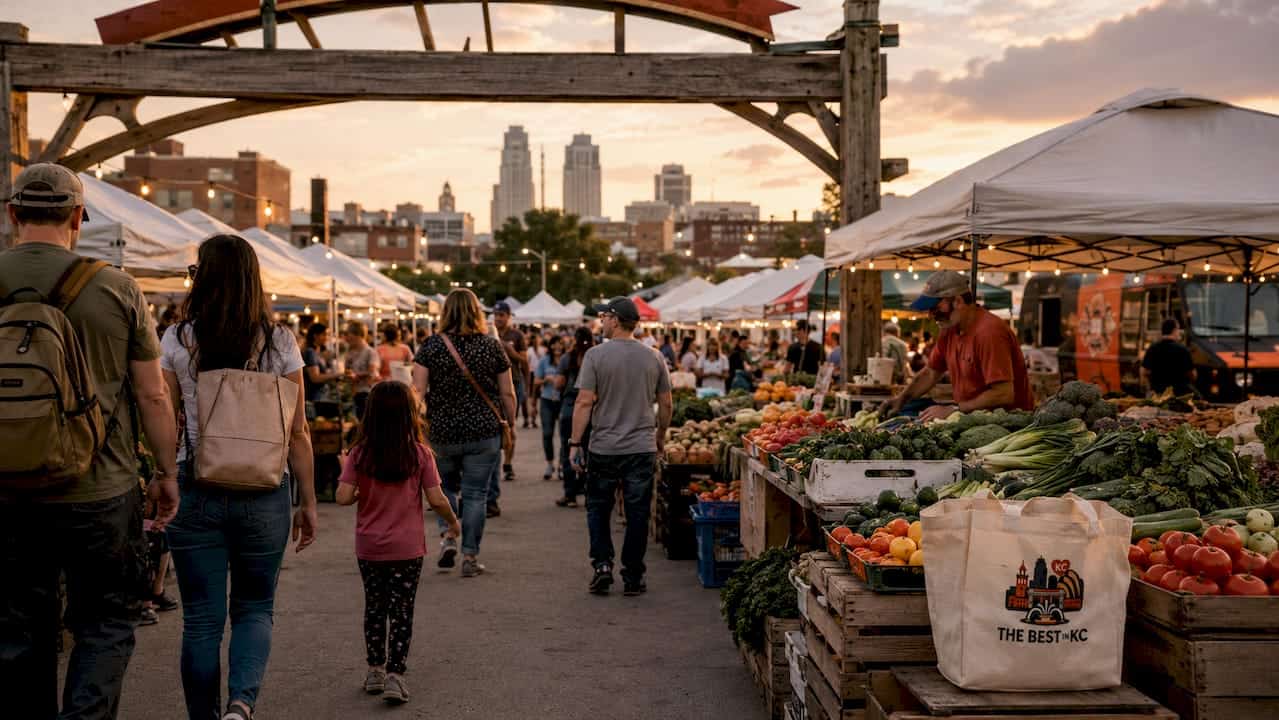
Eating local in Kansas City is defined as sourcing food from regional farmers, markets, and producers within the metro area rather than relying on national supply chains. The benefits of eating local KC reach well beyond flavor. A produce basket at KC City Market costs $14.56 compared to $24.79 at national chains, a savings of more than $10 per trip. Add in fresher nutrients, lower carbon footprints, and a local economy that keeps dollars circulating right here in the metro, and the case for buying local becomes hard to argue against. Whether you shop at the River Market on a Saturday morning or pick up a CSA box from a neighborhood grower, every purchase connects you to something bigger than a grocery receipt.
1. Benefits of eating local KC: the real price advantage
Local produce in Kansas City costs less than most people expect. That April 2026 price test found a comparable basket at KC City Market ran $14.56 versus $24.79 at a national chain. That $10.23 gap adds up fast across a full season of weekly shopping.
The savings come from fewer middlemen. Local farmers sell directly to you, cutting out the distributor, the regional warehouse, and the national logistics network that inflates shelf prices. Seasonal buying amplifies the savings further because produce costs less when it is abundant and does not need cold storage for weeks.
A few practical ways to stretch your local food budget even further:
- SNAP benefits are accepted at most Kansas City farmers markets, including City Market and Brookside Farmers Market.
- Buying in bulk during peak season and freezing or preserving at home locks in low prices year-round.
- CSA subscriptions from local farms often deliver more variety per dollar than a comparable grocery haul.
- Arriving late in the market day sometimes yields end-of-day discounts from vendors clearing perishables.
Pro Tip: Bring a cooler bag to City Market on Saturday mornings. Vendors near the north entrance often discount leafy greens after 11 AM.
2. Environmental advantages of choosing local Kansas City food
Farmers transitioning to regenerative agriculture in the KC region can achieve up to 80% higher profitability with annual returns of $20–$60 per acre in the first decade. That profitability incentivizes more farmers to adopt practices that rebuild soil, reduce runoff, and restore biodiversity rather than deplete it.
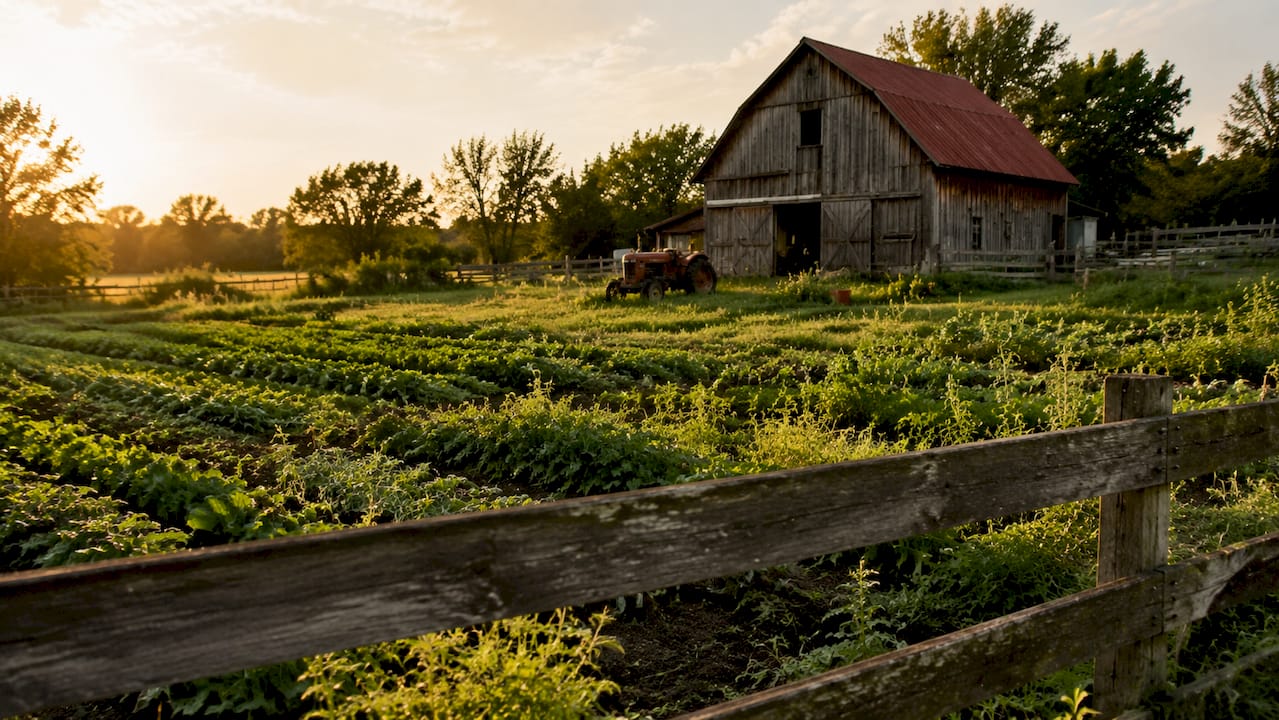
Shorter supply chains cut carbon emissions directly. A tomato grown in Leavenworth County travels a fraction of the distance of one shipped from California or Mexico. Less refrigerated trucking means less fuel burned and fewer emissions released before the food reaches your plate.
| Environmental Factor | Local/Regenerative Farming | Conventional Supply Chain |
|---|---|---|
| Transportation emissions | Low (regional delivery) | High (cross-country shipping) |
| Soil health | Improved through cover crops | Degraded by monoculture |
| Water quality | Better managed runoff | Higher chemical runoff risk |
| Biodiversity | Supported by crop rotation | Reduced by single-crop systems |
| Food waste | Lower (direct to consumer) | Higher (long storage cycles) |
Supporting eco-focused KC businesses that source locally creates a feedback loop. More demand for local food means more farmers can afford to farm sustainably, which protects the Missouri River watershed and the green corridors that define this region.
Pro Tip: Ask your farmers market vendor whether they use cover cropping or no-till methods. Farmers who do are actively rebuilding the soil beneath your food.
3. Why local produce is healthier for Kansas City residents
Local produce harvested at peak ripeness carries higher vitamin and antioxidant concentrations than food picked early for long-distance shipping. NKC Health points to this nutrient density as the top health advantage of buying from local farmers markets. A strawberry picked ripe and sold the next morning is nutritionally different from one picked green and ripened in a truck.
“Locally grown food is often harvested within 24 hours of being sold at the market, meaning it retains more of its natural vitamins, minerals, and antioxidants than produce that has traveled long distances.” — NKC Health
The health benefits extend beyond vitamins. Local farms in Kansas City frequently use fewer synthetic pesticides than large-scale industrial operations, particularly those selling at farmers markets where customers can ask directly about growing practices. That transparency is something a national grocery label cannot replicate.
Kansas City’s regional specialty crops add genuine diet diversity. Pawpaws, pecans, and heirloom tomato varieties are mostly available through local markets, not national grocers. Eating a wider range of produce, including varieties you cannot find at a chain store, supports a more varied gut microbiome and a more interesting plate.
4. How local food strengthens the Kansas City economy
The local multiplier effect is the clearest economic argument for buying local. Every dollar spent at a KC farmers market or local food producer recirculates within the regional economy rather than flowing to a national corporate headquarters. That recirculation funds other local businesses, local jobs, and local tax revenue.
The KC Farmers Market Passport, launched in 2026, makes participation concrete and rewarding. The free passport program gives shoppers who visit four or more local markets the chance to earn discounts at participating local businesses. It turns market shopping into a metro-wide economic loop.
“Choosing local food is an intentional act of community building that addresses systemic inequities in Kansas City’s food system.” — The Narrative Matters
The community impact shows up in neighborhoods too. KC Black Urban Growers deliver fresh, affordable produce within a one-mile radius of closed grocery stores, directly addressing food deserts in underserved parts of the metro. Their sliding-scale CSA model makes local food accessible regardless of income. Supporting these growers is not just a food choice. It is a vote for a more equitable city.
Local food producers do face real obstacles. Complex zoning and permitting regulations create administrative burdens that nonprofits like Cultivate KC help navigate. Buying from local producers helps sustain the revenue those farmers need to keep operating despite those regulatory costs.
Here is how the economic ripple effect works in practice:
- You buy tomatoes from a KC City Market vendor.
- That vendor pays a local farm worker and buys supplies from a regional co-op.
- The co-op pays local delivery drivers and sources from other KC producers.
- Those workers spend at local restaurants, shops, and services.
- The cycle repeats, keeping wealth inside the metro.
Checking out KC local food artisan producers is one of the fastest ways to find vendors whose purchases feed directly into this cycle.
5. Unique KC crops you cannot find at a national chain
Kansas City grows things you simply cannot buy at a national grocery store. Pawpaws, a native Midwestern fruit with a custard-like texture and tropical flavor, ripen in september and october and appear almost exclusively at local CSAs and specialty markets. Pecans grown in the KC region carry a richer, more buttery flavor than the commodity varieties shipped from Georgia or Texas.
These regional specialty crops are not novelties. They represent a food culture rooted in this specific geography, climate, and farming tradition. Eating them connects you to what this land actually produces rather than what a national distribution system decides to stock.
Heirloom tomato varieties, ground cherries, and locally grown sorghum also show up at KC markets in ways they never appear on chain store shelves. The KC Iconic Food Experiences Checklist captures some of the best seasonal finds worth tracking down this year.
6. Community gardens and food access across the metro
Community gardens are one of the most direct expressions of local food culture in Kansas City. They give residents without yard space the ability to grow their own food, build relationships with neighbors, and reduce their grocery bills simultaneously. The best community gardens in Kansas City range from small neighborhood plots to larger urban agriculture projects that supply produce to local food pantries.
These gardens also serve as training grounds. New growers learn soil preparation, composting, and crop rotation from experienced neighbors. That knowledge transfer builds long-term food resilience in neighborhoods that have historically lacked fresh food access.
The connection between community gardens and food sovereignty is direct. When a neighborhood grows its own food, it reduces dependence on supply chains that can fail, on stores that may close, and on prices that fluctuate with national commodity markets.
7. How the KC Farmers Market Passport changes the game in 2026
The KC Farmers Market Passport is the most practical new tool for local food engagement in 2026. Pick up a free passport, visit four or more participating markets across the metro, collect stamps, and unlock discounts at local businesses. The program launched ahead of the World Cup to showcase Kansas City’s food culture to a global audience.
The passport works because it removes the barrier of “I don’t know where to start.” It gives you a structured reason to visit markets you have never tried, from the Brookside Farmers Market to the Overland Park Farmers Market on the Kansas side. Each visit builds familiarity with local vendors and seasonal rhythms.
The program also creates a measurable economic loop. Discounts at local businesses reward market shoppers and drive foot traffic to KC retailers who participate. That cross-pollination between food producers and local merchants is exactly the kind of economic integration that strengthens a city’s food system from the ground up.
Key Takeaways
Eating local in Kansas City delivers measurable savings, better nutrition, and stronger community ties that no national supply chain can replicate.
| Point | Details |
|---|---|
| Real cost savings | KC City Market produce costs $10.23 less per basket than national chain alternatives. |
| Nutritional advantage | Local produce harvested at peak ripeness carries higher vitamins and antioxidants than shipped food. |
| Environmental impact | Regenerative KC farms achieve up to 80% higher profitability while rebuilding soil and cutting emissions. |
| Economic multiplier | Every local dollar recirculates regionally, funding jobs, services, and other KC businesses. |
| Community equity | Groups like KC Black Urban Growers use sliding-scale CSAs to bring fresh food to underserved neighborhoods. |
Why eating local in KC hits different when you actually show up
I have been to a lot of farmers markets in a lot of cities. Kansas City’s feel different, and I think I know why. The vendors here are not performing authenticity. They are just farmers who drove in from Leavenworth County or Platte City at 5 AM with whatever came off the vine that week. There is no marketing layer between you and the food.
The first time I bought pawpaws at City Market, I genuinely did not know what I was holding. The vendor spent five minutes explaining how to tell when they are ripe and what to do with them. That conversation does not happen at a grocery store. It is the kind of exchange that makes you feel like a participant in the food system rather than a consumer of it.
What I have come to believe, after years of covering this city, is that the local food movement in Kansas City is not a trend. It is a correction. Groups like KC Black Urban Growers and initiatives like the KC Farmers Market Passport are building infrastructure that makes fresh food a right rather than a privilege. When you buy local, you are funding that infrastructure. The local activists driving this work deserve more credit than they get.
The flavor argument is real too. A City Market peach in august tastes like a different fruit than anything in a national chain produce aisle. But the deeper reason to eat local in KC is that it keeps this city’s food culture alive, specific, and worth showing up for.
— Carlos Ochoa
Where The Best in KC takes you next in the local food scene
Kansas City’s local food scene rewards the curious. The Best in KC has done the legwork of finding the markets, producers, and experiences worth your Saturday morning. If you want to move beyond the grocery store and into the real flavor of this metro, the best local bus and walking tours are a great starting point. Several include stops at working farms, urban gardens, and market districts that show you how Kansas City’s food system actually functions. For a deeper look at who is growing and making food here, the KC local food artisan producers guide covers the producers worth knowing by name. The Best in KC keeps these lists current, local, and written by people who have actually been there.
FAQ
How much cheaper is KC City Market than a national grocery store?
A produce basket at KC City Market costs $14.56 compared to $24.79 at national chains, a savings of $10.23 per basket based on an April 2026 price test.
What is the KC Farmers Market Passport?
The KC Farmers Market Passport is a free 2026 program that rewards shoppers who visit four or more local markets with discounts at participating Kansas City businesses.
Does eating local produce actually improve nutrition?
Yes. NKC Health confirms that local produce harvested at peak ripeness contains higher concentrations of vitamins and antioxidants than food picked early for long-distance shipping.
How does buying local food help Kansas City neighborhoods?
The local multiplier effect keeps spending circulating regionally. Organizations like KC Black Urban Growers also use sliding-scale CSA models to bring fresh produce to food-desert neighborhoods within one mile of closed grocery stores.
Where can I find unique Kansas City crops like pawpaws?
Pawpaws, pecans, and heirloom varieties are primarily available through local CSAs, co-ops, and farmers markets in Kansas City. National grocery chains do not typically carry them.