







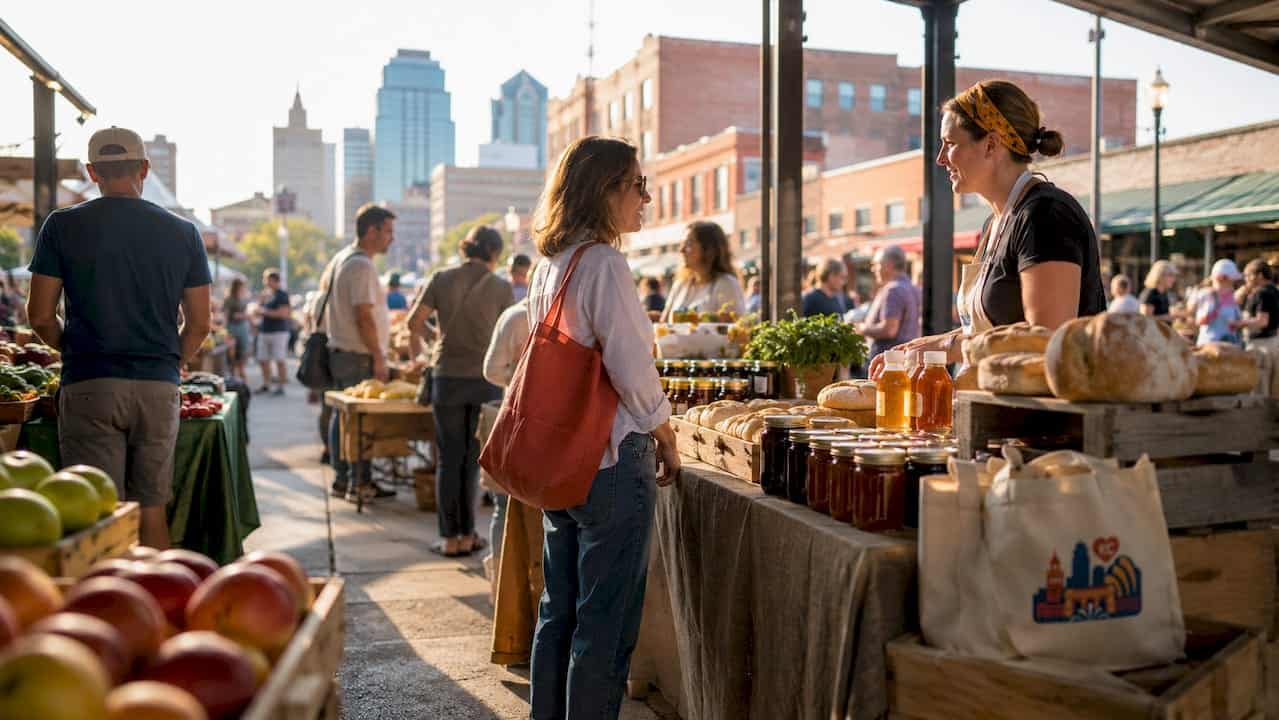
Kansas City’s local food artisan producers are small-batch makers who craft high-quality, distinctive food products you can find across the metro at farmers markets, farm stands, and specialty shops. This KC local food artisan producers list covers the standout names worth knowing in 2026, from bean-to-bar chocolate makers to regenerative farms and vegan ice cream pop-ups. The 2026 Kansas City Farmers Market Passport now covers 23 participating locations, making it easier than ever to connect directly with the people growing and making your food. Organizations like Cultivate KC, the Ivanhoe Neighborhood Council, and the K-State Olathe Food Innovation Accelerator have built the infrastructure that lets these producers thrive.
1. KC local food artisan producers list: the best makers to know in 2026
Kansas City’s artisan food scene rewards the curious. These are the producers worth going out of your way for.
Encore Coffee & Chocolate
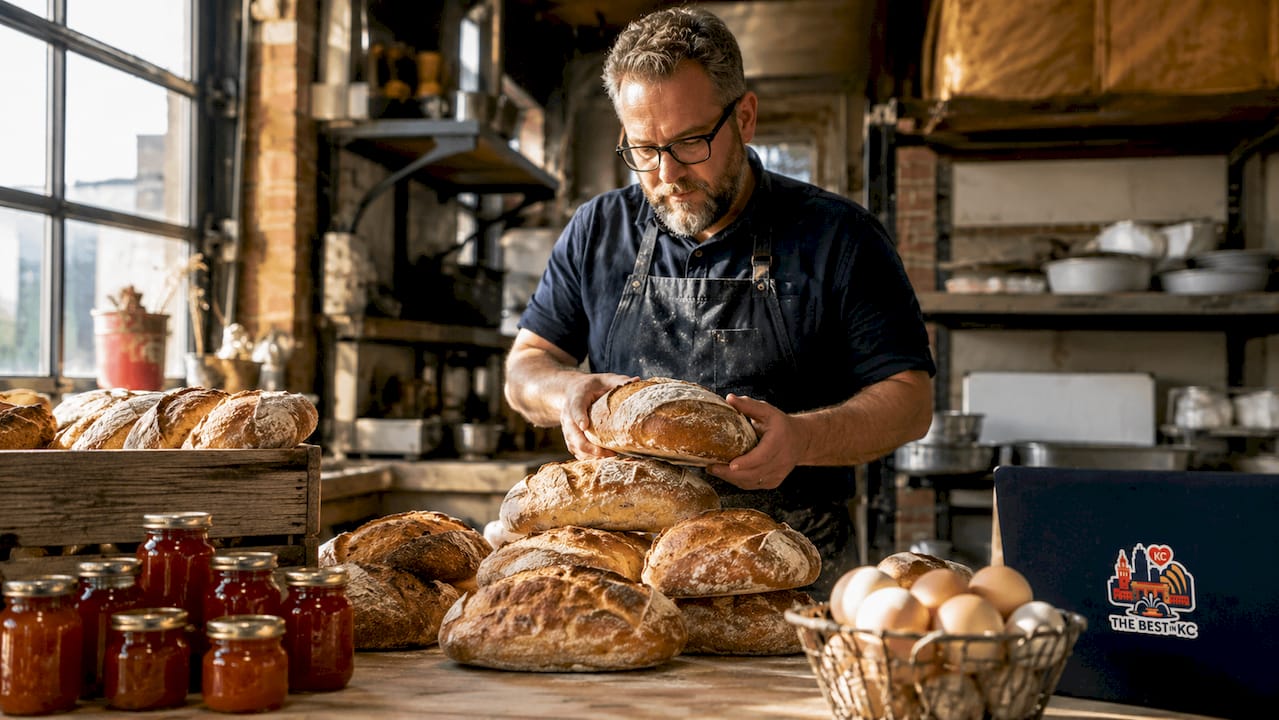
Encore Coffee & Chocolate is the most serious bean-to-bar operation in Kansas City. Owner Mike King controls every production stage, from ethical cacao sourcing through refining and final evaluation, which is why the chocolate tastes nothing like a supermarket bar. The bars have earned national recognition for their transparent methodology and clean flavor profiles.
- Signature item: Single-origin dark chocolate bars
- Where to find them: Available at select KC specialty retailers and online
- Price signal: Bars typically run $10–$18 depending on origin
- What makes it different: King manages sourcing relationships directly, cutting out commodity brokers
Pro Tip: Buy a sampler of two or three origins side by side. The flavor difference between a Peruvian and a Madagascan bar from the same maker is genuinely eye-opening.
Scream Queens Vegan Ice Cream
Scream Queens is a vegan ice cream pop-up run by a Kansas City firefighter with a roller derby background. The operation launched with support from the K-State Olathe Food Innovation Accelerator, which provided access to commercial-grade ice cream equipment that would otherwise be out of reach for a startup. The pop-up format keeps prices accessible and the menu rotating.
- Signature item: Rotating seasonal vegan ice cream flavors
- Where to find them: Pop-up events across KC metro; follow their social media for dates
- Price signal: Single scoops typically in the $5–$7 range
- What makes it different: The incubator model means production quality matches a full commercial kitchen
Locavore Regenerative Farm
Locavore Regenerative Farm is one of the clearest examples of sustainable food production in the KC metro. The farm feeds pigs with rescued food waste, closing a loop that most conventional operations ignore entirely. Consumers who buy directly from Locavore get pork raised on a genuinely ecological model, not just a marketing claim.
- Signature item: Pasture-raised pork from waste-fed pigs
- Where to find them: Listed through The Food Circle and select KC farmers markets
- Price signal: Direct farm pricing; cuts vary
- What makes it different: Regenerative practices that actively restore soil rather than just avoid harm
Lorellie’s Handcrafted Caramels
Lorellie’s Handcrafted Caramels built a following by combining a physical storefront with a presence in KC maker collectives and boutique malls. That hybrid sales approach keeps overhead low while putting the product in front of shoppers who would never seek out a standalone candy shop. The caramels are made in small batches with real cream and butter.
- Signature item: Small-batch handcrafted caramels in seasonal flavors
- Where to find them: Maker collectives and boutique retail locations across KC
- Price signal: Bags and gift boxes in the $8–$22 range
- What makes it different: The multi-channel model means you can find them without planning a special trip
Local Honey and Specialty Preserves Producers
Several KC-area beekeepers and preserve makers sell exclusively through farmers markets and CSA add-ons. Missouri’s direct-market channels are the primary access point for regional specialties like pawpaw preserves and sorghum honey that never reach grocery shelves. These producers rarely have websites, so the market is the only place to find them.
- Signature items: Raw local honey, pawpaw jam, sorghum-based spreads
- Where to find them: City Market, Brookside Farmers Market, and farm stands
- Price signal: Honey jars typically $8–$15; preserves $6–$12
- What makes it different: Hyper-local varietals that reflect specific KC-area flora
2. Kansas City farmers markets and artisan markets worth exploring
Farmers markets are the primary venue for finding local food producers KC residents cannot access anywhere else. The 2026 Farmers Market Passport lists 23 participating locations across the metro, includes language accessibility resources, and offers prizes to encourage visits to multiple markets. That scale means you can spend an entire season working through the list and still find new producers.
| Market | Location | Specialties | Hours (general) |
|---|---|---|---|
| City Market | River Market, KCMO | Produce, honey, baked goods, ethnic foods | Sat–Sun, year-round |
| Brookside Farmers Market | 63rd & Brookside Blvd | Organic produce, artisan bread, flowers | Sat, may–oct |
| Overland Park Farmers Market | 7950 Marty St, OP | Vegetables, meats, specialty preserves | Sat, may–oct |
| Waldo Farmers Market | 75th & Wornall, KCMO | Small-batch producers, local honey | Sat, seasonal |
| Lee’s Summit Farmers Market | Downtown Lee’s Summit | Family farms, baked goods, crafts | Sat, seasonal |
City Market in the River Market neighborhood is the largest and most consistent year-round option. It draws the widest range of producers, including vendors who only appear there and nowhere else. Brookside skews toward organic and specialty producers, with a tighter vendor list and a neighborhood feel that makes it easier to have real conversations with growers.
Pro Tip: Arrive at City Market before 9 a.m. on Saturdays. The best honey, specialty mushrooms, and small-batch preserves sell out fast. Parking in the River Market garage off 5th Street is free before 10 a.m.
The Farmers Market Passport is worth downloading before your first visit. It lists which markets have Spanish-speaking vendors, which accept SNAP/EBT, and which are accessible by bus. That kind of practical detail makes the difference between a productive morning and a frustrating one.
3. How KC artisan producers use food incubators and multi-channel sales
Food incubators give KC artisans access to commercial-grade equipment they could not afford independently. The K-State Olathe Food Innovation Accelerator is the clearest example, providing specialized tools like commercial ice cream makers that let a pop-up like Scream Queens produce at a quality level that matches established brands. That access removes the biggest barrier for food entrepreneurs: the gap between a great recipe and a scalable product.
“Every step matters, from where the cacao comes from to how it’s refined and evaluated.” — Mike King, Encore Coffee & Chocolate
Mike King’s approach at Encore Coffee & Chocolate reflects a broader truth about KC’s best artisan producers. The ones who last are the ones who control their production process from raw ingredient to finished product. That level of involvement is time-consuming, but it produces a consistency that contract manufacturing cannot replicate.
Multi-channel sales strategies are equally important in a metro as geographically spread out as KC. Lorellie’s Handcrafted Caramels demonstrates the model clearly: a storefront anchors the brand, while presence in maker collectives and boutique malls puts the product in front of shoppers in Overland Park, Waldo, and the Crossroads without requiring a second location. The result is broader reach at a fraction of the cost of opening multiple shops.
Pro Tip: When you find a producer you love at a farmers market, ask directly where else they sell. Most KC artisans maintain a short list of retail partners and will tell you exactly where to find them between market seasons.
The unique businesses that only exist in KC often follow this same pattern: a hyper-local product, a founder who handles every step personally, and a sales strategy that combines direct-to-consumer with carefully chosen retail partners.
4. How to support KC local food artisan producers year-round
Supporting local food producers KC residents care about requires more than a single Saturday market visit. The best approach combines seasonal market attendance with CSA memberships, direct online orders, and social media follows that alert you to pop-up events and new product drops.
Resources and buying channels worth bookmarking:
- 2026 Kansas City Farmers Market Passport: Lists all 23 participating locations with hours, languages spoken, and tips
- The Food Circle: An online directory of KC-area sustainable producers including Locavore Regenerative Farm
- USDA Local Food Directory: A national tool for finding farmers markets and CSAs near any KC zip code
- Slow Food USA: Connects KC residents to local food chapters and producer networks
- Producer social media pages: Most KC artisans announce pop-ups, seasonal products, and market schedules on Instagram and Facebook before updating any website
- CSA programs: Several KC-area farms offer weekly or biweekly boxes that include add-ons from artisan producers like honey, preserves, and specialty grains
Kansas leads the nation in sorghum and wheat production, which means the grain-based artisan products you find at KC markets, from specialty flours to sorghum syrups, are genuinely regional in a way that matters. That agricultural backbone supports a food artisan ecosystem that most metros cannot replicate.
Seasonal planning makes a real difference. Spring markets (april through june) bring the widest variety of produce and the most new producer debuts. Fall markets (september through november) are peak season for preserves, root vegetables, and specialty meats. Winter markets exist but are smaller; City Market and a few indoor options keep running, but the vendor count drops significantly.
Pro Tip: Follow the top KC Instagram accounts that cover the local food scene. They consistently surface new artisan producers weeks before any directory picks them up.
Key takeaways
Kansas City’s best artisan food producers are found through direct-market channels like farmers markets, food incubators, and multi-channel retail, not grocery store shelves.
| Point | Details |
|---|---|
| Use the Farmers Market Passport | The 2026 passport covers 23 KC metro locations with language resources and visiting tips. |
| Arrive early at markets | The best small-batch products sell out before 9 a.m. at high-traffic markets like City Market. |
| Incubators enable quality | Facilities like K-State Olathe give startups commercial equipment that raises product quality. |
| Multi-channel sales expand reach | Producers like Lorellie’s combine storefronts with maker collectives to reach shoppers metro-wide. |
| Direct purchase supports producers most | Buying at the market or through CSAs puts more money directly in the producer’s hands. |
What I’ve learned from years of buying directly from KC artisans
The conventional wisdom about local food is that it costs more and requires effort. That’s true. What nobody tells you is that the effort pays off in ways that have nothing to do with price.
I’ve been buying directly from KC producers for years, and the single biggest shift in my thinking came from a conversation at City Market with a honey producer who explained why his spring batch tasted completely different from his fall batch. Same bees, same hives, different flowers. That kind of specificity is invisible in a grocery store jar. You only learn it by showing up and asking.
The producers who impress me most in KC are the ones who treat every step as a quality decision. Mike King at Encore Coffee & Chocolate is the clearest example: the man sources his own cacao, refines it himself, and evaluates every batch. That’s not a marketing story. It’s a production philosophy that shows up in the flavor. Most KC artisans I’ve met operate the same way, whether they’re making caramels, raising pigs on food waste, or running a vegan ice cream pop-up out of a commercial incubator kitchen.
My honest recommendation for anyone new to this scene: start with the Farmers Market Passport, pick three markets you’ve never visited, and talk to the producers. Don’t just buy and leave. Ask where the ingredient came from, why they chose that variety, what’s coming next season. The answers are almost always more interesting than anything on the label.
— Carlos Ochoa
The Best in KC has more ways to find great local food
The Best in KC covers the full KC food scene, from artisan producers at Saturday markets to the local food trucks running artisan-style menus across the metro. If you want to go deeper into the city’s food culture without spending a weekend planning logistics, the best local food tours in Kansas City put you in front of producers, neighborhoods, and dishes that most residents never find on their own. Every list on The Best in KC is written by locals who have actually been there, with addresses, timing, and the kind of detail you only get from showing up.
FAQ
What is a local food artisan producer?
A local food artisan producer is a small-batch maker who crafts food products by hand using quality ingredients, often sold directly to consumers through farmers markets, farm stands, or specialty shops rather than through large retail chains.
Where can I find KC artisan markets in 2026?
The 2026 Kansas City Farmers Market Passport lists 23 participating market locations across the metro, including City Market in the River Market neighborhood and the Brookside Farmers Market on 63rd Street.
How do KC food incubators help artisan producers?
Facilities like the K-State Olathe Food Innovation Accelerator provide commercial-grade equipment and mentoring that let startups produce at a professional quality level without the capital cost of building their own kitchen.
What makes KC artisan food producers different from grocery store brands?
KC artisan producers typically control every step of production, from sourcing to final product, which produces flavor consistency and regional specificity that mass-market brands cannot replicate.
How do I support local food producers KC year-round?
Use the Farmers Market Passport to visit multiple markets across seasons, join a CSA program that includes artisan add-ons, and follow producers directly on social media for pop-up announcements and seasonal product releases.